"A friend, not an enemy": I talked to Diego Abeja at the Platzi conference
August 29, 2026· 6 min read
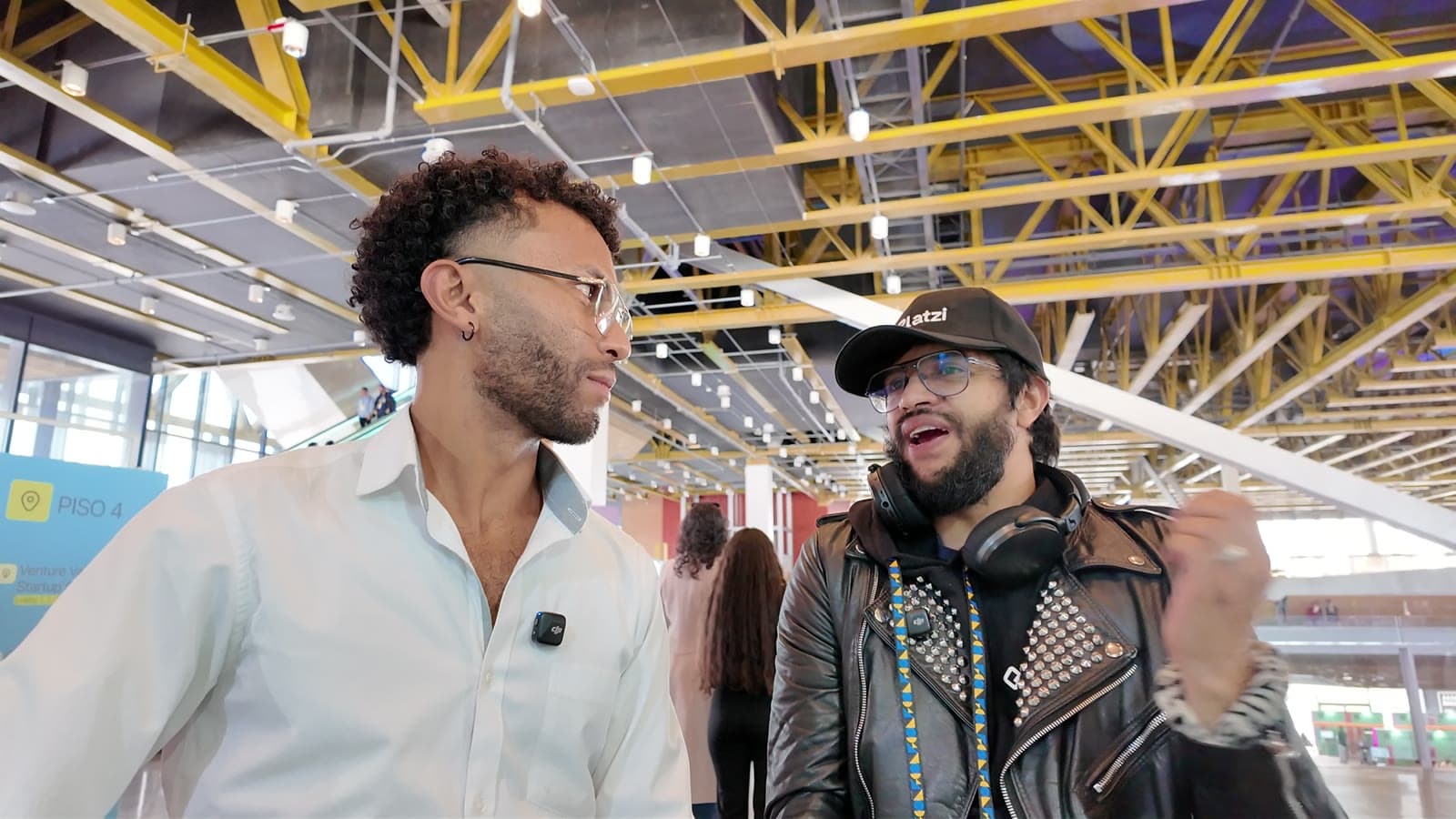
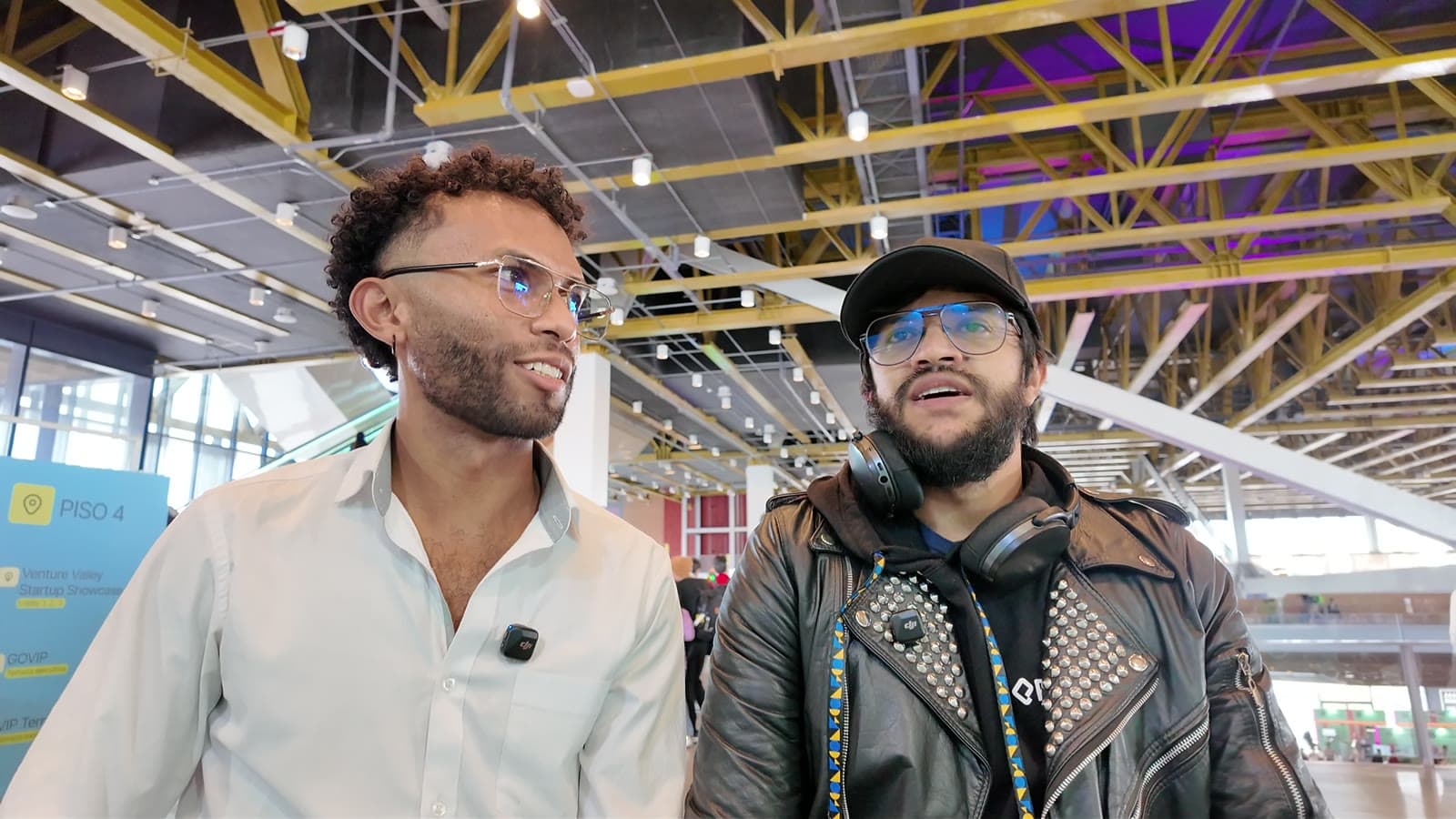
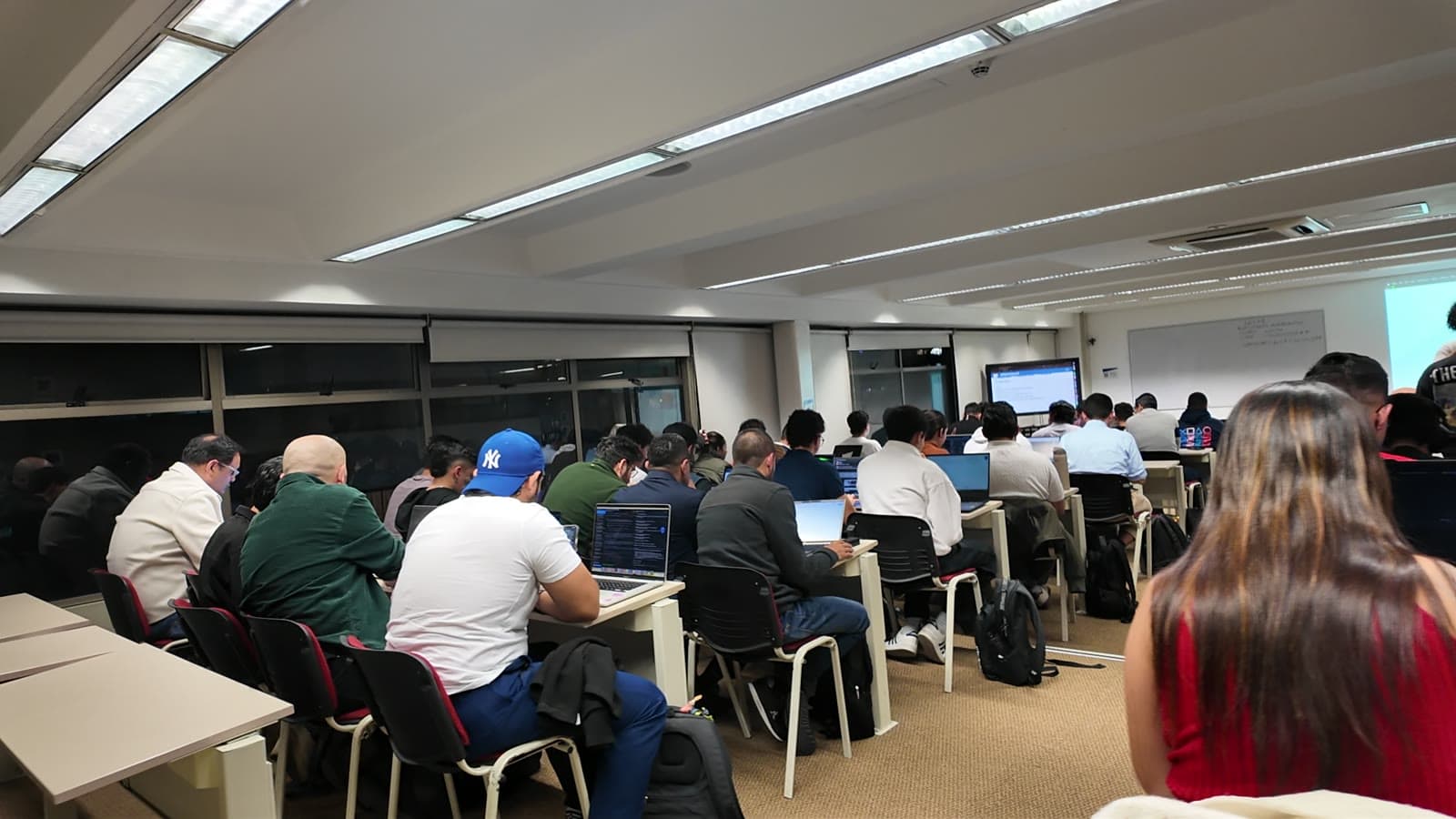
At the Platzi conference I ran into someone I hadn't seen in years: Diego Cruz, better known as Abeja.We met in 2017, in the first cohort of Platzi's JavaScript school — an in-person bootcamp, pretty disruptive for Platzi's usual model of videos and self-paced courses. Our graduation project was an Uber clone: I built the entire frontend, he built the entire backend, from his supercomputer, which he called the Alien.That detail matters for one reason: we met each other before the whole AI boom. So when I spotted him in his Platzi cap between startup booths, I pulled out the camera and asked him the questions I'd ask anyone who lived through the before and the after.
Diego is now a cloud engineer at Propelus, where he hits five years this November.
Answers are lightly edited for readability; the ideas and the words are his.
The transition: from writing everything by hand to delegating
I asked him about that exact moment when you realize this thing can do a full day's work for you. His answer wasn't technical, it was about attitude:
"You have to be disruptive yourself too, and not see AI as an enemy, but as a friend. These are tools that help you be more efficient at work."
Then he gave me the concrete example, which is my favorite because it's honest:
"I've never been strong on unit testing. But now AI writes tests for the code insanely fast, so a weakness I had — I can lean on AI to write tests, and learn."
That's the interesting part. He didn't use AI to show off where he was already good. He used it to close the gap he'd been carrying for years.
The doctor analogy
When I asked about people who resist, he hit me with the comparison that stuck with me all week:
"I've always seen engineering, this whole world of programming, as being like a doctor. A doctor never stops studying. Take a doctor who studied 50 years ago and is still practicing — you see them going to conferences, using new tools. If today they say 'no, I don't want to learn that because it's technology and I come from an older world', they're going to get left behind."
Then he raised the stakes: AI isn't just programming anymore. We talked about remote surgery — the best surgeon in the world operating on you from another continent because nobody here can do it — and about catching cancer early in routine exams.
"So if we close ourselves off with 'AI is going to leave us jobless', it's more like: what can I learn and use from AI that makes me competitive in the market?"
What hasn't changed in all these years
I asked him what he still does exactly the same way. He answered without hesitating: reviewing the pull request.
"It's great to read it and say 'ah, we could optimize this function over here'. Because a lot of the time, if the model doesn't have much context about your own business... AI wrote more code and it isn't using what's already there. So you say: look, we have this function that does the same thing, lean on that function, don't write me new code."
And then came the line that, to me, is the thesis of the whole interview:
"That makes the app more robust, and later on it's a little more readable — not just for the person, but for the AI."
Business context is still human. So is judgment.
His advice for someone just starting out
I asked for a message to the person sitting in their room right now trying to learn to code, reading every day that they're replaceable.
"This is like the fifth revolution. We're at that moment of the industrial revolution where everything stopped being done by hand and started being done with machines. It's the same: figure out where I can focus. There will be plenty of jobs AI steps in and replaces, but there will be others it won't."
And he pointed out an advantage his generation didn't have:
"I'm a little older than you. I actually used the library — I have my own set of encyclopedias. But today you're one click away from all the information. It's about using those tools and never stopping learning."
The best argument against "AI does everything": music
This is where the conversation got good. Diego used music — not code — to explain why fundamentals still matter:
"If you don't really know the basic concepts of music, you can't tell AI 'make me a song that sounds nice'. Because to the AI, what is nice? Instead I can say: I need a salsa song, in four-four time, using these specific instruments. Now I'm giving it much bigger context, instead of saying 'make me a nice song'."
Swap "song" for "feature" and you have exactly why two people get wildly different results from the same tool. The prompt isn't the problem; the problem is not knowing enough to write a good prompt.
His actual trick (no Jarvis involved)
I asked for the secret weapon, the hidden agent, the Jarvis. The answer was far less glamorous and far more useful:
"At the company we use a lot of skills. We were doing something very manual, checking things against the database, so we built a skill to generate those reports I used to have to go dig up myself. Now I just hand it the information and the skill generates the whole report, looking great."
No spectacular demo, no three-layer agent architecture. A manual, repetitive process that somebody decided to stop doing by hand. That's 90% of the real value of all this, today.
What I took from the conversation
"A friend, not an enemy" isn't optimism, it's strategy. The useful question isn't whether you'll be replaced, it's what you'll learn to stay competitive.
Use AI where you're weak, not where you're already strong. Diego went after tests, which was his gap.
Write code the AI can read. Making an app robust and legible is no longer just for your human teammates.
Fundamentals are what let you ask well. Without music theory, "make me something nice". With it, salsa in four-four.
Start with the boring report. The first agent that actually changes your week is the one that kills a manual task, not the one that looks good on video.
Thanks, Abeja. Great to see you again — still a legend.
TODO(rulo): once the full interview is up on YouTube, drop the link here and confirm the exact name of the conference edition.
Newsletter
One real automation, explained, every two weeks.
What I'm building with AI for my work and my students': the flow, the click-based tools and the hours it gives back. No news digests.No spam. Unsubscribe in one click. If you're already in Week 0, you already get it.